

We Need To Talk About Your Research: Collaborative Community Research, Design, Execution, and Dissemination
Published: 12 March 2026
A workshop on collaborative community research, bringing students, academics and community speakers together to discuss ethical engagement, power dynamics, trust-building and practical strategies for more reciprocal, non-hierarchical research practices.
By Isobel Harvey, Ross Christie, Anna Stacey and Christie Chan
On Friday 28th November 2025, SGSAH-funded researchers Isobel Harvey (University of Glasgow), Anna Stacey (Queen Margaret University), Ross Christie (University of the Highlands and Islands) and Christie Chan (University of Edinburgh) ran a workshop on collaborative community research, focusing on addressing the pitfalls of extractive power dynamics and the possibilities of reciprocity with community participants. This workshop was attended by students from across Scotland, with guest speakers from both academic and community backgrounds. They represented a diverse range of fields, including archaeology, cultural heritage, linguistics, social sciences, and community-based research. It was a day rich in discussion, networking and reflection on practice.
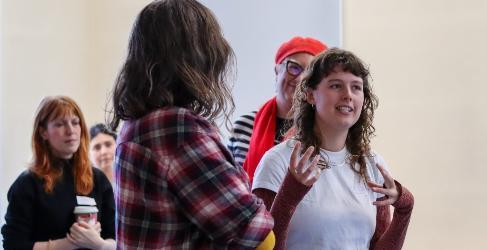
Our workshop was funded by the Cohort Development Fund, originally developed as part of an exercise at SGSAH’s First-Year Symposium in Stirling. Encouraged by the positive feedback we received afterwards, we decided to go ahead with applying for funding and running the workshop – and were delighted to be successful. From recruiting attendees to delivering the workshop, we wanted the process to be as non-hierarchical as possible. This commitment to breaking down traditional hierarchies that can often exist in the academy led us to choose the Edinburgh Quaker Meeting House as our venue. The egalitarian layout of the space, along with its location outside an institutional setting, were deliberately selected to ensure that all attendees, whether within or outside academia, could feel comfortable.
The workshop began with an icebreaker in which each attendee positioned themselves around the room as if it were a map of the world. We were then challenged to talk to the people around us about our life stories, but without using the words ‘research’ or ‘PhD’. This was done as an example of methods for working with community members that avoids establishing a separation between academic and non-academic at the start of a session.
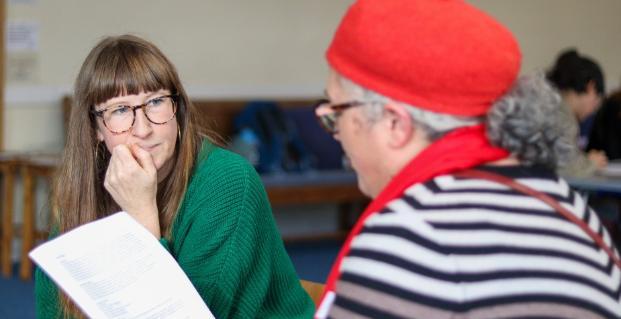
We then had a series of talks from each of our invited speakers: Lisa Williams (Edinburgh Caribbean Association), Dr Kenny Brophy (University of Glasgow), Prof. Stephen Driscoll (University of Glasgow), Frances Simmons (Dualchas: Dynamic Connections between Community and the Land), and Catriona Choinnich Isaac. These talks covered a range of topics, including working with community groups to ensure heritage exhibitions are safe and welcoming places, best practice for acknowledging contributions of research participants, and time investments needed to build trust between communities and academics.
These talks were followed by our second workshop of the day: a moderated roundtable with all the speakers, in which a combination of pre-designed questions and new questions from all workshop attendees led to very fruitful discussions, particularly around the ethics of working with communities in research projects. Various mechanisms for building trust were proposed, such as the importance of researchers being accountable for their actions, deep listening strategies, and being honest about the limitations of what is possible within a single research project – a point felt to be particularly pertinent for PhD researchers. Power was another theme that came up several times during this discussion – partly around using the authority that researchers have to highlight historical and modern issues faced by the communities they are working with, and partly around the power dynamics implicit within the language being used, as terms like ‘community’ can sometimes be othering and monolithic. Speakers emphasised the importance of recognising the plurality of identities participants can have, and referring to them by terms of their choosing.
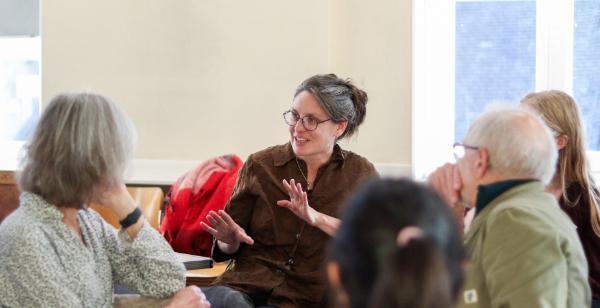
After lunch, we had a series of hypothetical case studies that attendees could choose to work though. These ranged from the deposition of archaeological artefacts to what happens if a key contributor withdraws their consent towards the end of a project. These case studies allowed room for reflection on potentially unexpected aspects of collaborative research projects. This reflective space was then carried on into the next session, where everyone was invited to consider their own research projects and how they might integrate some of the discussion points from the previous session into their own work. Finally, we closed the day with a plenary discussion bringing together all of the themes raised throughout the various sessions.
The process of running this workshop has been incredibly rewarding. Collaboratively putting together a funding application was a novel experience for most of the team. The process of designing the sessions, approaching possible speakers, and advertising the workshop then provided a host of new experiences. In line with the non-hierarchical principles we had for the workshop, we discussed the progress of these steps regularly and divided up tasks based on each person’s skill set and time, allowing us all to work with the fluctuating pressures of a PhD over the months we were involved in organising this workshop. Finally, running the workshop in November and hearing the thoughtful plenary discussion on practice was particularly satisfying, as it meant seeing an idea we had had early in the first year coming into fruition.
First published: 12 March 2026